
Measurements to take
- Window width and existing rod length
- Rug area clear of door swings
- Available outlets and safe lamp locations
This guide contains no affiliate links or sponsored product recommendations.
1. Move the light before buying it
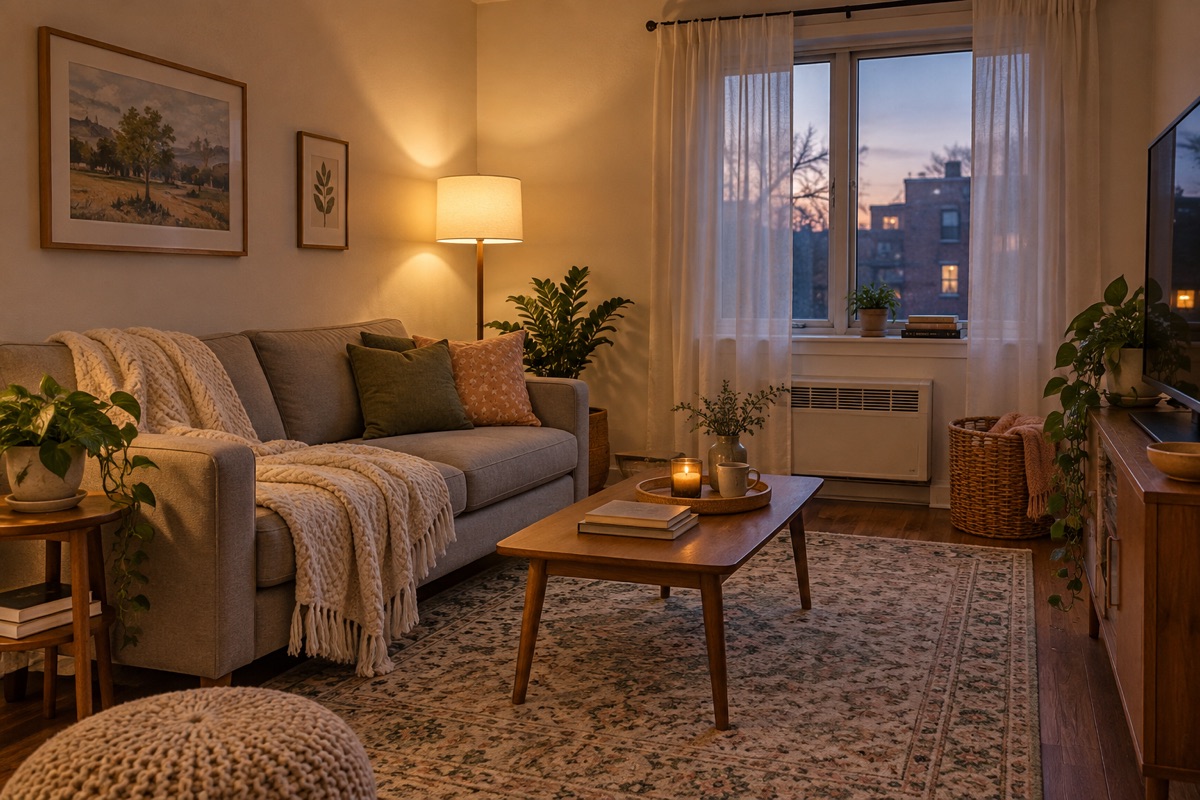
Try a lamp in two positions after dusk. A corner lamp can brighten a wall and make a small room feel less flat without adding another object to the coffee table. Use bulbs within the fixture's rating and keep fabric clear of the shade.
2. Add one touchable layer
A washable throw on a modest sofa changes texture and is easy to carry to the next home. Choose a fabric you can maintain rather than a delicate piece that makes the room harder to live in. One useful layer often does more than several decorative ones.
3. Let curtains work with the window
Sheer or lightweight curtains can soften glare while leaving daylight. Measure the existing rod and window before choosing fabric. Check whether the curtain can open fully and whether it will touch a heater; do not hang fabric over heat sources.
4. Give the floor a boundary
A rug can define the seating area, but only if it leaves doors and chairs free to move. Measure the usable floor rectangle, not the full wall-to-wall span. Use a suitable non-slip pad and check that the combined thickness will not catch the door.
5. Repeat one quiet color
Use a color already in a book spine, artwork or cushion and repeat it once. This is an editing exercise, not a shopping list. Photograph the room in daylight and at night before deciding whether it needs anything else.
Before you call it done
- Move an existing lamp after dusk
- Choose one washable textile
- Measure the window and door swing
- Check heat and trip hazards