
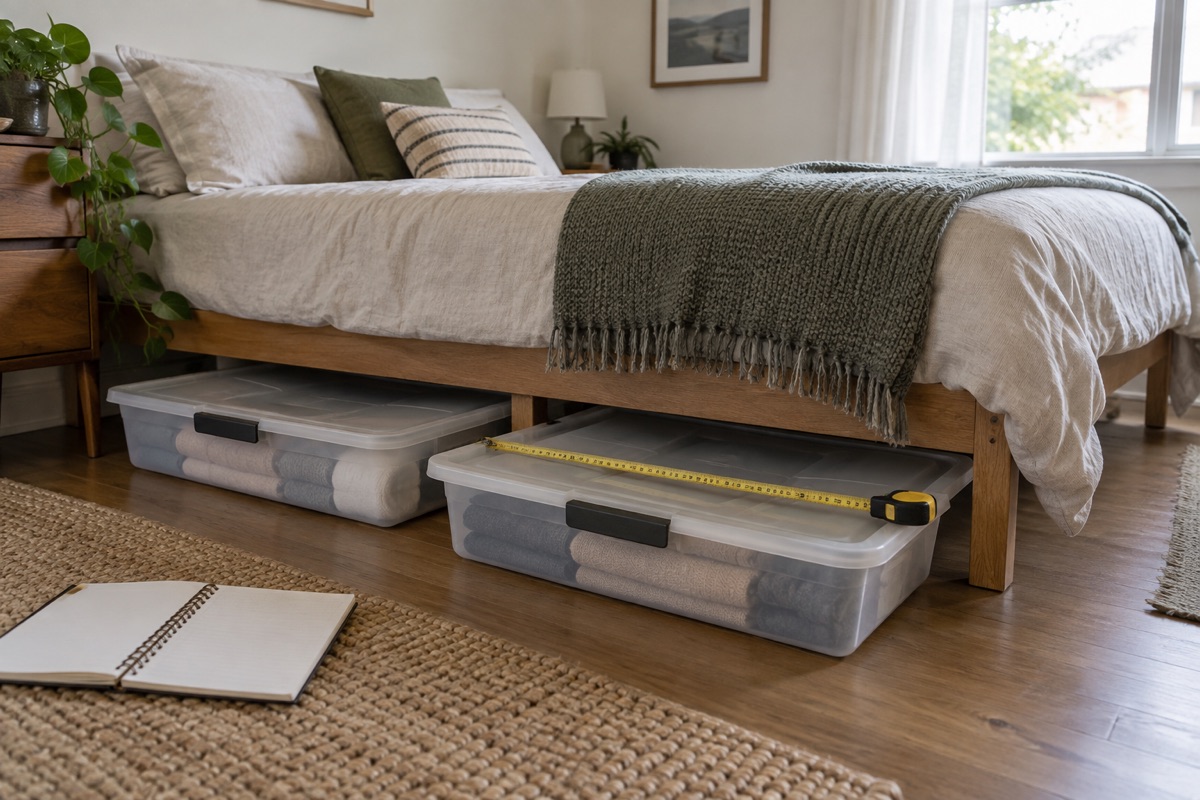
Measurements to take
- Lowest clearance beneath the bed frame
- Open length and width between legs or supports
- Pull-out space beyond the bed edge
This guide contains no affiliate links or sponsored product recommendations.
Measure the smallest opening
Measure from floor to the lowest rail or support, not just the height of the mattress. Repeat at the point where a bin must enter. Note center legs, crossbars and any sloped frame parts. Allow extra room for the lid, handle and a hand to pull the container; a bin that fits exactly may still be difficult to use.
Check the route out
A container needs enough floor space to slide fully out before you can open it. Measure from the bed edge to the opposite wall or furniture. On thick carpet, wheels and hard plastic runners may drag; try moving an empty box through the path first. If the bed is against a wall, choose the accessible side intentionally.
Match contents to access
Under-bed storage is better for clean seasonal textiles, spare bedding or infrequently used items than for things needed every morning. Use a closed container when dust is a concern and dry textiles completely before storing. Avoid compressing items that require airflow. Label the accessible end so the contents are clear before you drag every bin out.
Pause before adding capacity
An empty suitcase or a lidded box you already own may fit. Take its outside dimensions, including wheels and handles, and test the actual pull-out route. Buying a specialized bin only makes sense after this trial reveals a need it cannot meet.
Before you call it done
- Measure the lowest opening
- Record obstacles under the frame
- Measure pull-out clearance
- Test an empty container first