
Measurements to take
- Interior width after door hardware
- Hanging height below the rail
- Floor depth with closet door open
This guide contains no affiliate links or sponsored product recommendations.
Start with what you wear now
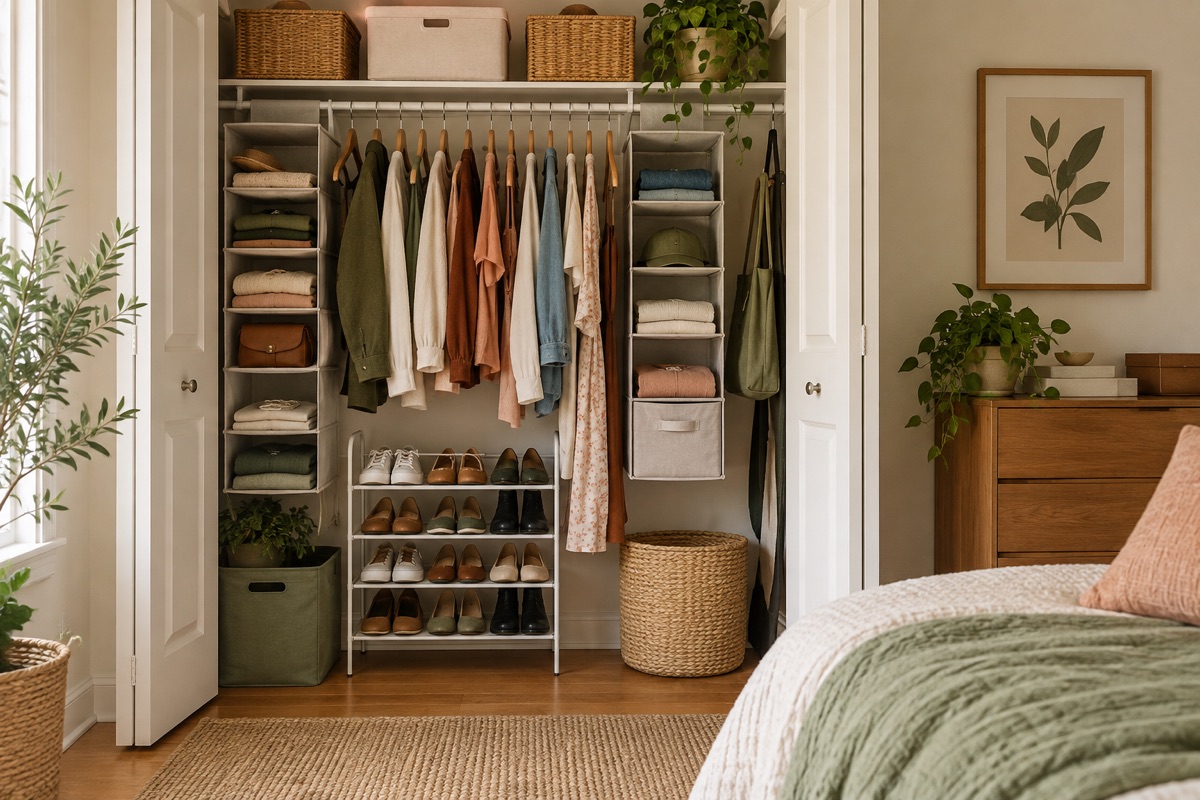
Remove only one category, such as shirts, and return the pieces you actually reach for. This keeps the project manageable and shows the real capacity of the rail. Store seasonal items separately if the room allows, but keep them labeled and accessible enough to rotate when weather changes.
Use portable boundaries
A basket can hold scarves or gym clothes; a freestanding shoe rack can keep pairs visible. Measure the inside of the closet, not the opening alone, because trim and door tracks steal usable width. Check that drawers or baskets can be pulled out with the closet door in its normal position.
Keep the rail honest
Overloading a hanging rod can damage the closet and make clothes hard to see. Move bulky items to shelves or a dresser if available, and follow any hardware load guidance. Avoid adhesive or drilled additions until you know the surface and rental rules.
Pack by category later
Portable baskets can become moving containers. A simple label on each lets the next closet come together faster. Leave a little empty space now so the system can absorb laundry day rather than requiring an exact arrangement every morning.
Before you call it done
- Edit one clothing category
- Measure inside the closet
- Test pull-out access
- Leave a little spare capacity